
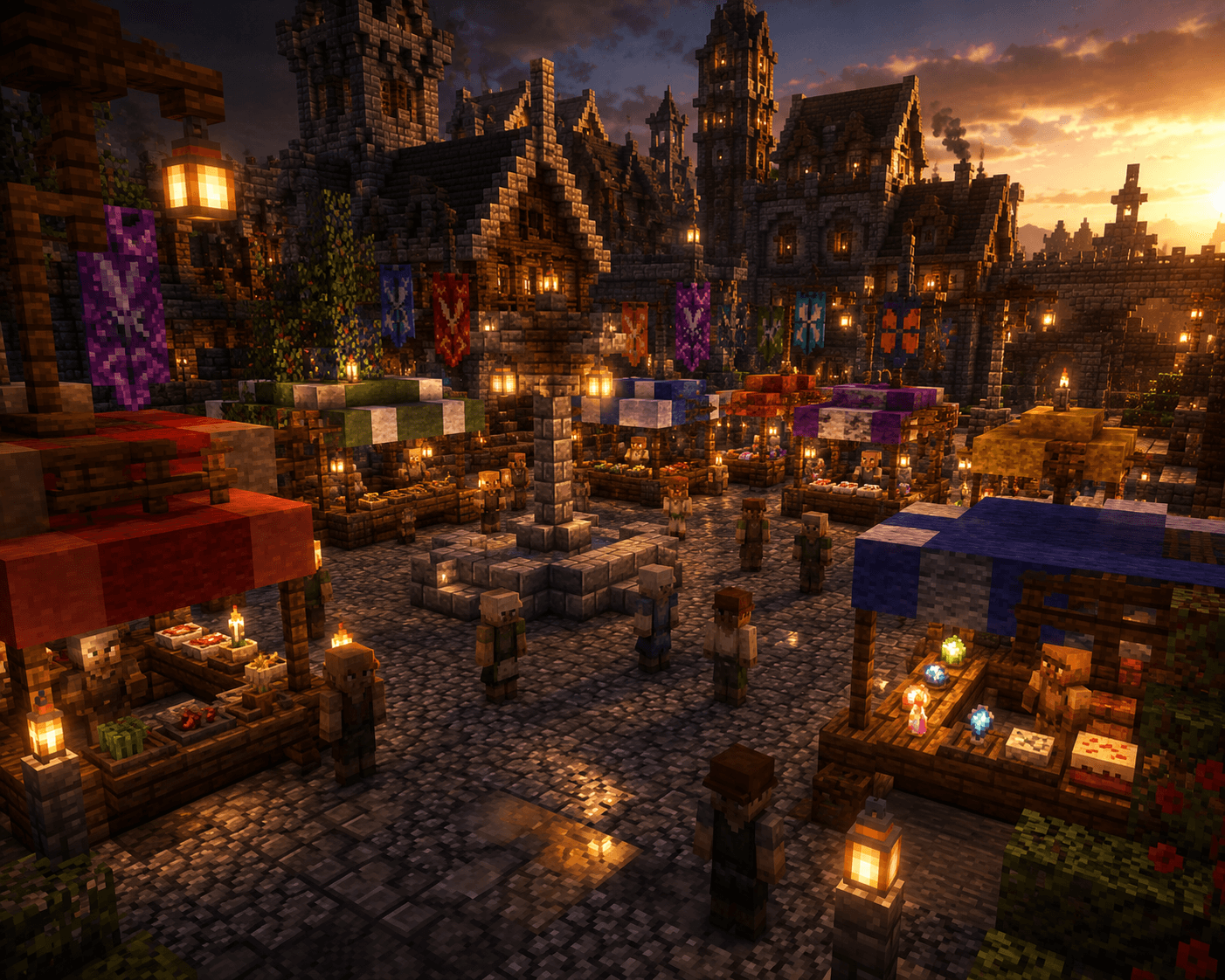

Every thriving Minecraft civilization needs a bustling marketplace where players can gather, trade, and celebrate shared prosperity. A well-designed trading post market hub serves as the heart of your world, creating a central gathering point and demonstrating your creative building skills. This tutorial will guide you through designing and constructing an impressive medieval-style trading post complete with vendor stalls, decorative elements, and functional spaces for commerce and community.
Planning Your Market Hub
Before placing a single block, establish the vision for your trading post.
Location Selection is paramount. Choose a site that's central to your world's major biomes and bases. A location near your main base is ideal for convenience, but consider choosing a location equidistant from multiple important areas to serve the entire community.
Size Determination depends on your ambitions. Small markets can function in a 30x30 block area, while impressive markets easily occupy 100x100 blocks or more. Consider your available space and building experience when deciding.
Theme Selection provides architectural cohesion. Medieval, modern, fantasy, and steampunk are popular choices. Decide on your theme early as it influences every building decision afterward.
Terrain Preparation requires leveling and clearing the chosen site. Mark out your market's perimeter clearly and remove all unnecessary terrain features and vegetation.
Architectural Layout
Central Plaza Design
The market's heart should be an open plaza where merchants and players gather. A 50x50 block area provides comfortable space for shops and movement.
Cover the plaza floor with attractive paving blocks. Cobblestone, stone bricks, and dark oak wood create classic medieval aesthetics. Alternate block types in a pattern for visual interest—perhaps a checkerboard or repeating geometric design.
Add elevation changes through gentle slopes or tiered levels. These prevent the flat plaza from appearing bland and create natural sight lines directing attention to important vendor areas.
Vendor Stall Placement
Arrange vendor stalls around the plaza perimeter, creating a natural flow that encourages exploration. Each stall should occupy approximately 8x8 to 12x12 blocks.
Space stalls with 2-3 block walkways between them, preventing the market from feeling cramped while maintaining a cohesive appearance.
Position high-traffic vendor areas (like general goods and food) near the plaza center, while specialized merchants (like potion dealers or enchanted item vendors) can occupy peripheral locations.
Building Individual Vendor Stalls
Stall Structure Foundation
Create a basic frame using wood logs or wooden stairs to suggest a roof structure. Dark oak or spruce wood provides authentic medieval aesthetics.
Add wooden beams for visual support, using half-slabs and stairs to create interesting architectural details. These don't provide structural support but vastly improve aesthetics.
Roof Construction
Sloped roofs immediately convey "medieval market stall." Create these using stairs and slabs, building a pyramid or triangular roof shape over your stall foundation.
Color-coordinate roofs through biome associations—perhaps red terracotta roofs for desert areas and dark wood for forest regions. This creates visual variety while maintaining cohesion.
Storage and Display
Arrange chests or other storage blocks inside stalls to represent merchant inventory. Don't overcrowd the space—allow room for NPCs or players to move around the stall.
Use item frames on walls to display sample merchandise. A potion shop might showcase different potion bottles, while a tool merchant displays diamond pickaxes.
Vendor Stall Variety
Create distinct merchant types through specialized decorations:
Food Market features composters, barrels, and cauldrons. Display pumpkins, wheat, carrots, and beets around the stall.
Potion Shop uses brewing stands, cauldrons, and bookshelves. Hang potion bottles from chains or display them on shelves.
Tool and Weapon Merchant displays armor stands wearing enchanted gear. Surround the stall with crafting tables and grindstones.
Enchanted Book Vendor features library aesthetics with bookshelves, lecterns, and enchanting tables for decoration.
Block and Material Trader displays various building materials in organized piles or arranged on shelves.
Decorative Elements
Lighting Design
Proper lighting creates atmosphere and improves nighttime visibility. Use lanterns, torches, and soul lanterns to create a welcoming glow.
Position lights to eliminate dark corners while maintaining dramatic shadows that enhance the medieval aesthetic. Target 12+ light level in walkways and 8+ in stall interiors for practical visibility.
Banners and Signage
Banners hanging from poles or buildings add colorful decoration and help identify merchant types. Each vendor can have unique banner colors and patterns.
Use item frames with signs or name tags to label merchant specialties. Clear identification helps players quickly find the vendors they need.
Water Features
A central fountain or water feature adds charm to the plaza. Build a simple fountain using a stone pillar, water source blocks, and attractive frame elements.
Ensure water doesn't flow into merchant stalls or create inconvenient puddles in walkways.
Seating and Gathering Areas
Create benches using stairs and slabs positioned to face the central plaza. These provide resting spots and contribute to the community atmosphere.
Consider adding a stage or raised platform for announcements, events, or creative performances.
Functional Spaces
Auction Block Area
Designate an area for player-to-player trading or auctions. A raised platform with clear sightlines works perfectly for public sales events.
Guild Hall or Community Center
A large building attached to the market serves as a meeting space. Include tables, chairs (using stairs), and a central gathering area.
Entrance Gateway
Create an impressive entrance through which players arrive at the market. An archway, tower, or decorated gate structure welcomes visitors and establishes the market's importance.
Storage Building
Even markets need behind-the-scenes storage. Build a separate structure for excess inventory and supplies, keeping the market itself clean and organized.
Building Techniques and Tips
Color Palette Selection
Establish 3-4 primary colors used throughout the market. This creates visual cohesion without monotony. Combine wood types, stone variants, and accent blocks strategically.
Symmetry and Balance
While perfect symmetry feels formal, asymmetrical balance creates a more organic marketplace feel. Aim for rough visual balance rather than mirror images.
Scale and Proportion
Ensure buildings feel appropriately sized. Stalls should be taller than player height to convey "shop," but not so tall that the market feels oppressive.
Adding Character
Small details differentiate excellent builds from merely functional ones:
- Vines and flowers climbing on walls
- Stacked barrels or crates for storage
- Chains holding signs or decorations
- Carpet or rug areas defining spaces
- Paintings on walls for artistic flair
Connecting Your Market Hub
If your world has multiple bases or communities:
- Build roads connecting the market to major locations
- Incorporate nether rail stations if you have nether infrastructure
- Create teleportation areas using end portals or command blocks
- Designate waypoint markers for easy navigation
Expansion Possibilities
Design your market with future expansion in mind. Leave adjacent space for additional stalls, buildings, or features.
Consider adding seasonal sections (holiday markets, fishing docks during seasonal themes) that can be activated throughout the year.
Creating an Inviting Community Space
Successful markets feel alive and welcoming:
- Include seating for gathering and socializing
- Build spaces for community events or competitions
- Incorporate player-contributed artwork or displays
- Create a bulletin board for announcements or player messages
Conclusion
A trading post market hub represents your world's economic and social center. This tutorial provides the framework for building an impressive marketplace, but your creativity determines the final result. Whether you build a small country market or a sprawling merchant city, the core principles of good design—cohesive theming, functional layout, and thoughtful decoration—ensure your market becomes a beloved community gathering place.
Start building today and watch your market hub evolve into the heart of your Minecraft civilization. Your world's players will appreciate having a central hub where they can gather, trade, and celebrate their shared building achievements.